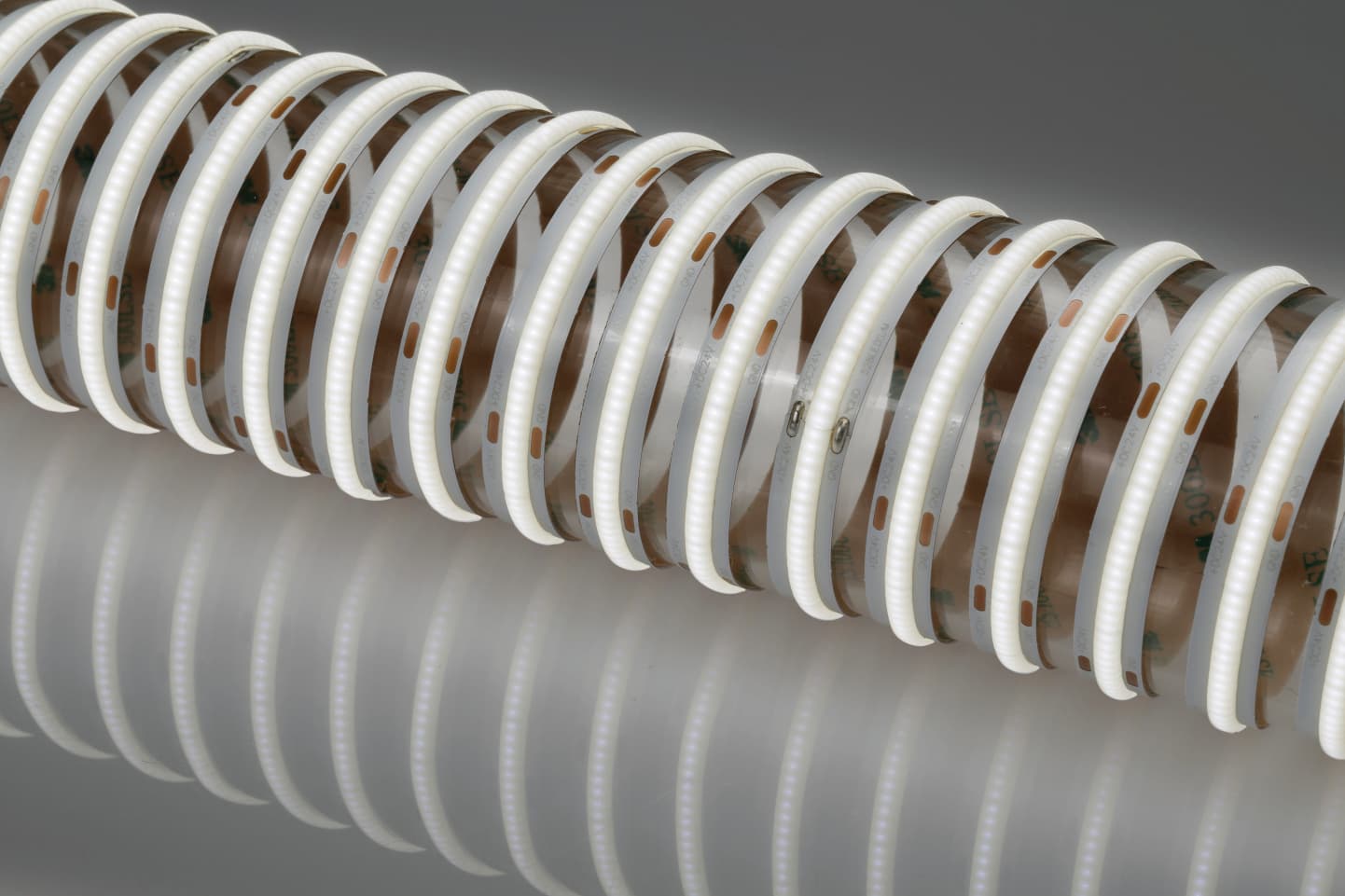
What is COB LED strip lighting and when to use it?
Many think that COB LED strip is the premium choice for a LED Strip specification, but it all comes down to what your customer plans to use it for and where. In this blog we explore what it is and when you should consider installing it.
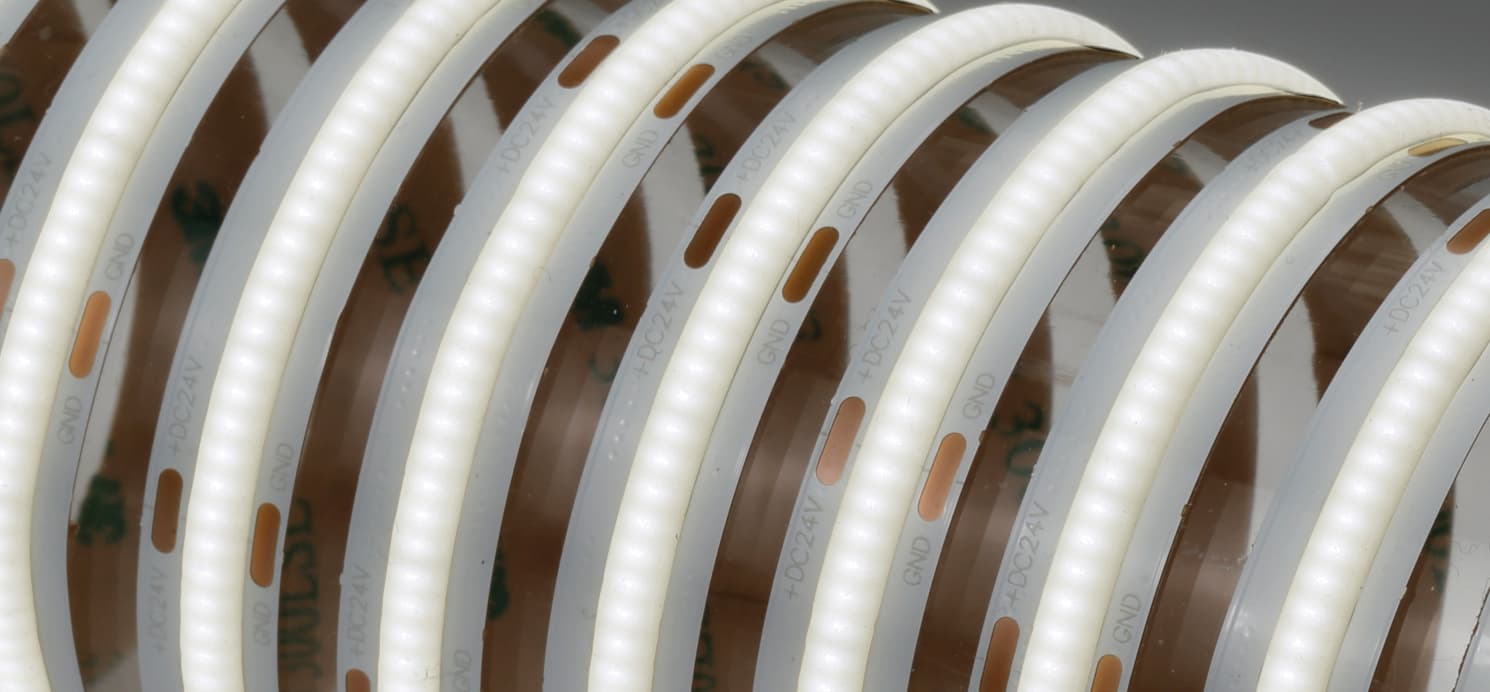
What is COB LED?
Chip-on-Board LED, or COB strip uses multiple, small LED chips that are densely packed onto a single substrate. Contrast this with traditional LED strip, which has individual chips spaced along the tape.
Comparing COB vs regular LED strip
The most obvious difference between the two is the light output.
COB LED strip provides a single high intensity, uniform light output so you can install it in a shallow profile. Contrast this with traditional LED strip, which has individual chips spaced along the tape. It means that if you look directly at it as a light source you may be able to see visible spotting, but this is not a problem if you install it as an indirect light source in an aluminium profile.
For illuminance levels regular LED strip tends to have a higher output and a slight edge in terms of energy efficiency, although both are very efficient.
Regular LED is also easier to install. You can cut it quickly and join lengths together using connectors, so it is simpler to adapt when on site. You need to be more precise when cutting COB because the chips are more densely packed.
And finally, there is a cost difference between the two. You will find that COB is more expensive than regular LED strip.
When to use COB LED Strip?
There is no absolute right or wrong answer for selecting either type of LED strip. Both provide an excellent source of indirect lighting for primary, accent and/or task lighting.
Consider COB LED for:
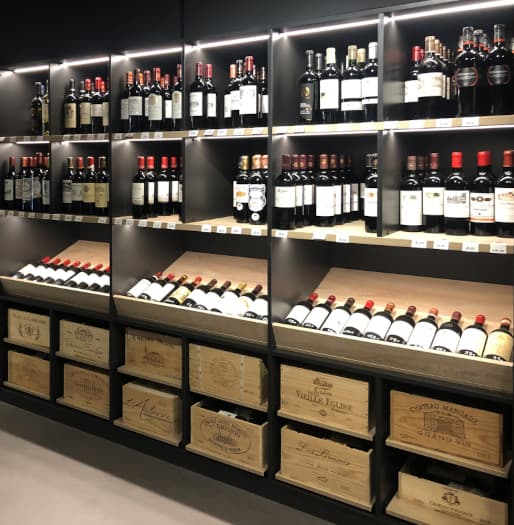
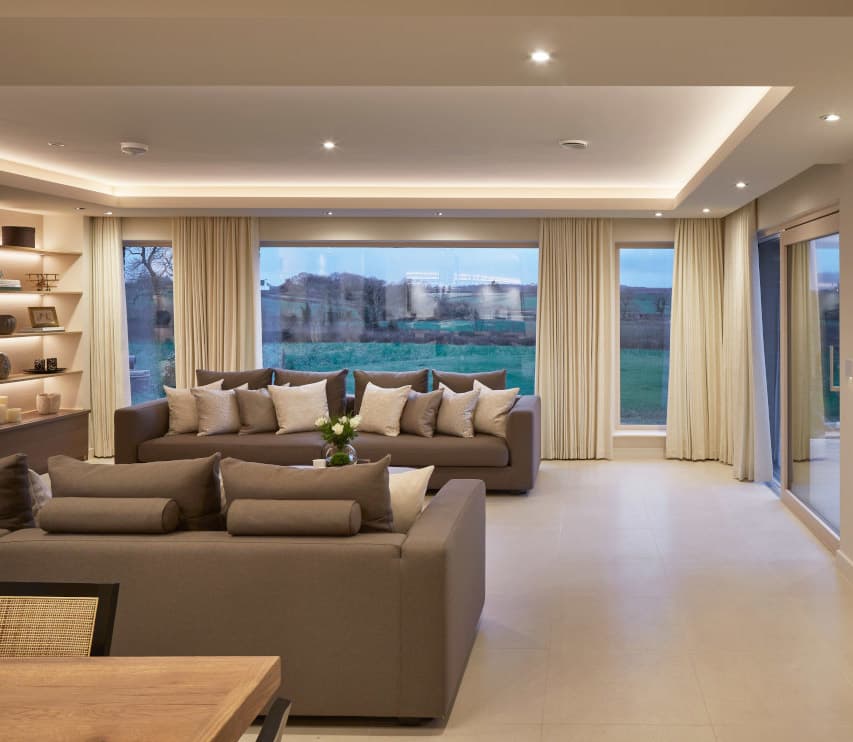
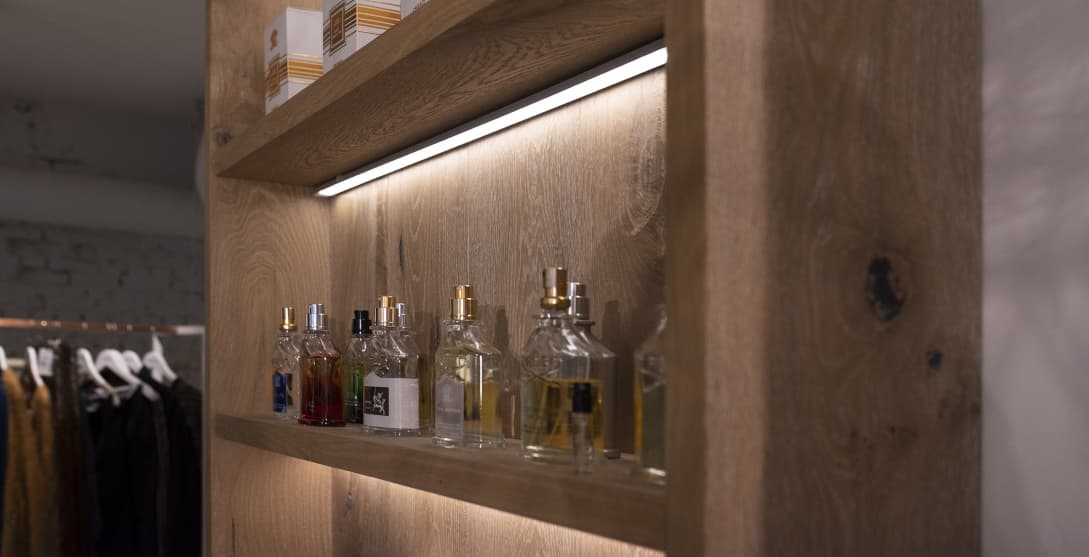
Visible locations. If you are installing it on open shelves, under cabinets or along kitchen plinths where it is hard to install an aluminium profile to hide the light source.
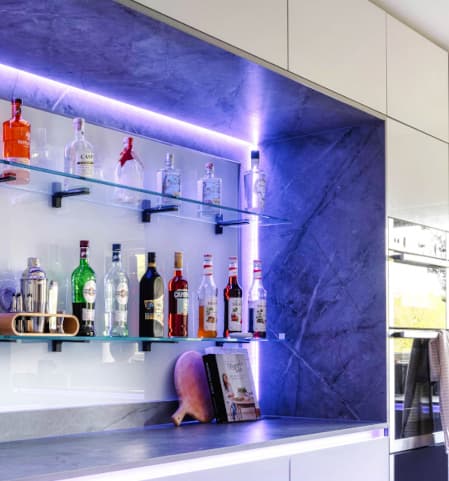
Reflective surfaces. Again, this comes down to visibility. If you are positioning the light source over shiny countertops, glass tiles, or polished floors for example, then COB may be a better choice.
In narrow spaces. If there is not enough room for deeper aluminium profiles and you cannot hide the LED strip, then specify COB.
High end displays. If your customer wants to have a luxurious uniform glow for display without any harsh reflections.
For high end finishes. If your customer demands a smooth uniform light source, then COB LED is a great option.
When to use Regular LED strip
Regular LED strip lighting is a more cost-effective option than COB. Typically, you would install it for:
High intensity lighting. If you need to light a larger area as the primary light source or for task lighting, then regular LED strip tends to be more efficient at higher outputs.
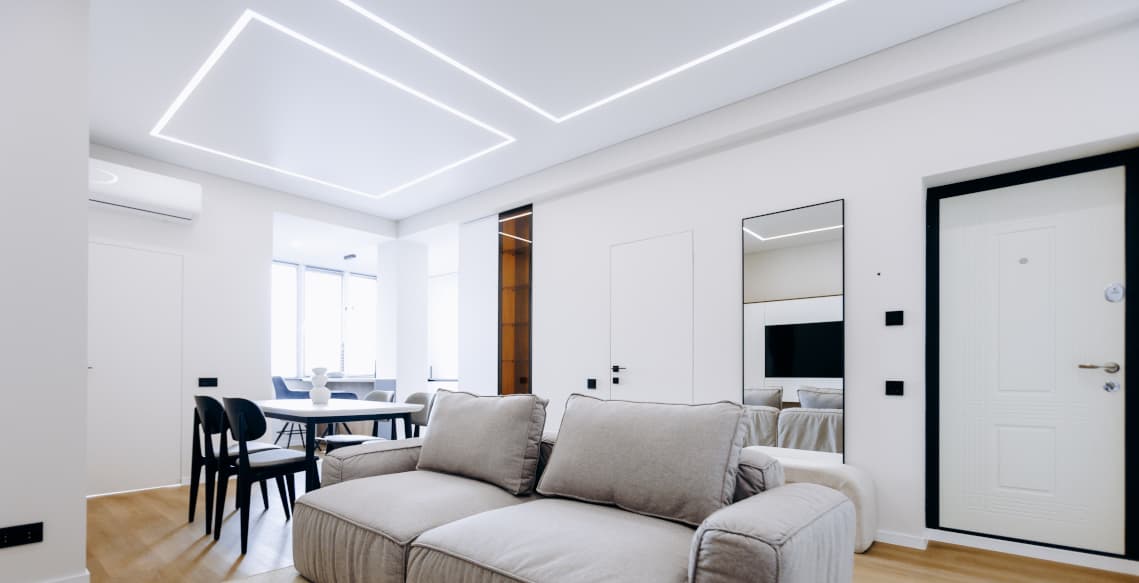
Indirect accent lighting. If the light source is hidden, either in an aluminium profile and/or reflects off a non-shiny surface then opt for regular LED strip. It’s a great choice for cove lighting, behind TVs or under furniture.
Cost sensitive projects. Standard LED strip tends to be more cost effective then COB, especially if you are using a long run.
More colour temperature options. You generally have more choice with colour temperature using regular LED compared to COB.
The demand for LED strip lighting is growing rapidly. It has gone from a nice to have to a must have for many installations. COB LED is a relatively new technology and is becoming more popular with its dot free light output.
Knowing when to use it and upsell to your customer as an option could make the difference in winning a high-end lighting job, whether it’s in the home or for a commercial project.
Articles you may also like
These are articles we recommend that you also mind find interesting

Be the first to know the latest updates
Subscribe to our newsletter!
