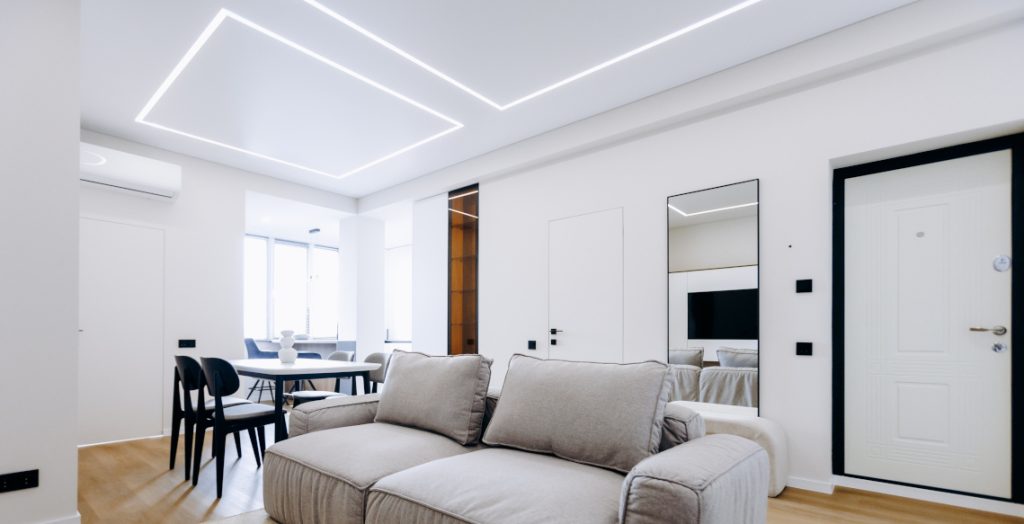
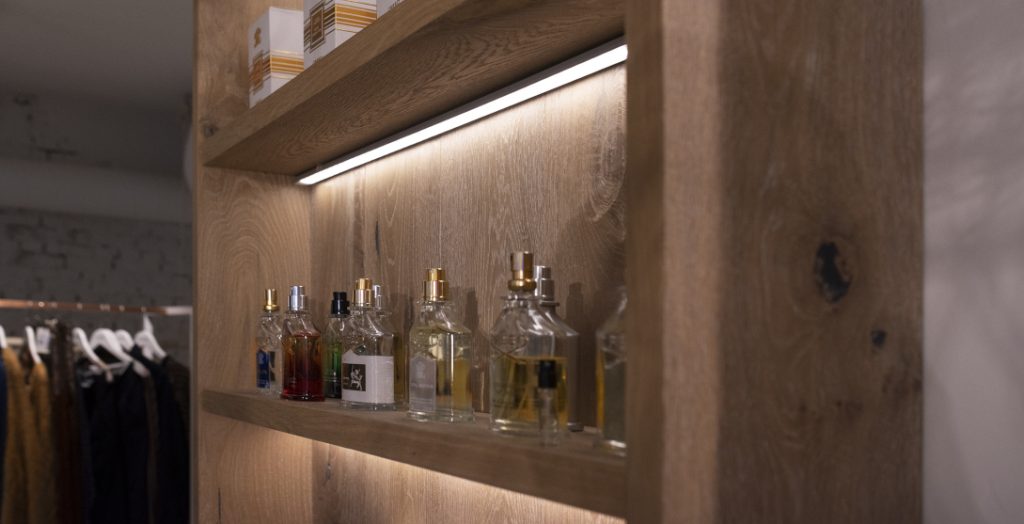
Whether you are lighting historic architecture or the frontage of a business, it needs to make a statement.
The façade of a building is the first thing that people will see. It should captivate passers-by, help businesses make a statement, and for hospitality venues encourage people inside.
As with landscape lighting you should work with your customer to decide what you want to light. A good design will generally pick out certain features while allowing other areas to fall into shade to create contrast.
It is vital that you only light what you need to light and avoid any light spillage into other areas that could be a nuisance, cause glare and light pollution. Most local councils will insist that you adhere to DarkSky requirements and avoid any light pollution.
What to light?
The first step is to decide how much of the building and which areas you want to light. Are there features that deserve special attention? What about the main doorway and other entrances? And for commercial premises you may need to highlight the signage.
This will help you select the luminaires that you need, what beam angles you need to consider, the brightness of lumen output and what colour temperature you want.
If you are using an uplight, then make sure it is tastefully hidden during daylight hours and carefully consider the beam angle that you need to make sure that you only light what is needed and that there is no light spillage that will cause glare. Use asymmetric lighting to ensure that you can accurately target the light.
Select a luminaire with a wide beam of for example 110o if you want to create wash of light across a surface or to illuminate an area of the building from further away. A medium beam of about 45o is a good choice for mid-level lighting to create a swathe of light across a dedicated area. And to pick out features, details and even entrances of a building you will need a narrow beam of about 6o.
Decorative wall lights are another way that you can highlight architectural features or light entrances. Again, you need to consider what beam angle you need, depending on whether you want to graze the walls with floods of light or narrow it down with directional lighting to pick out individual features or create blades of decorative lighting.
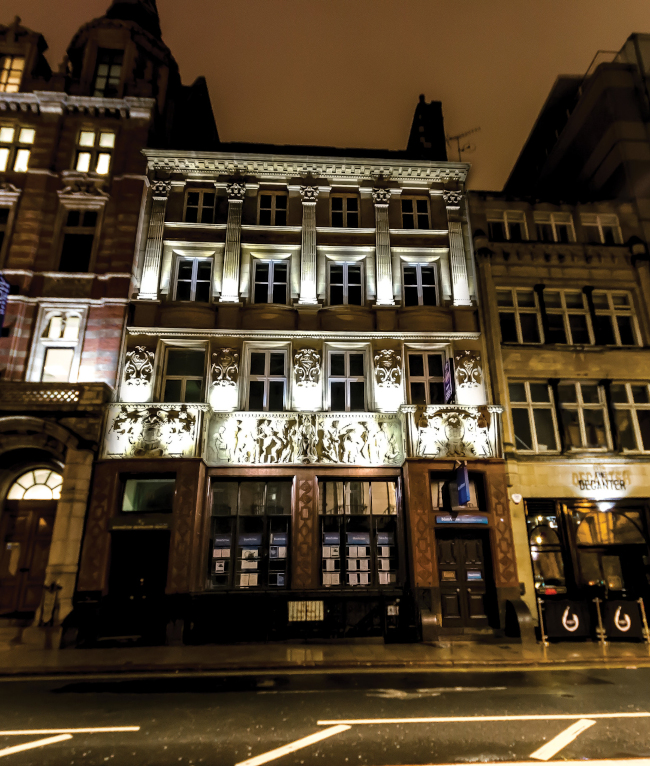
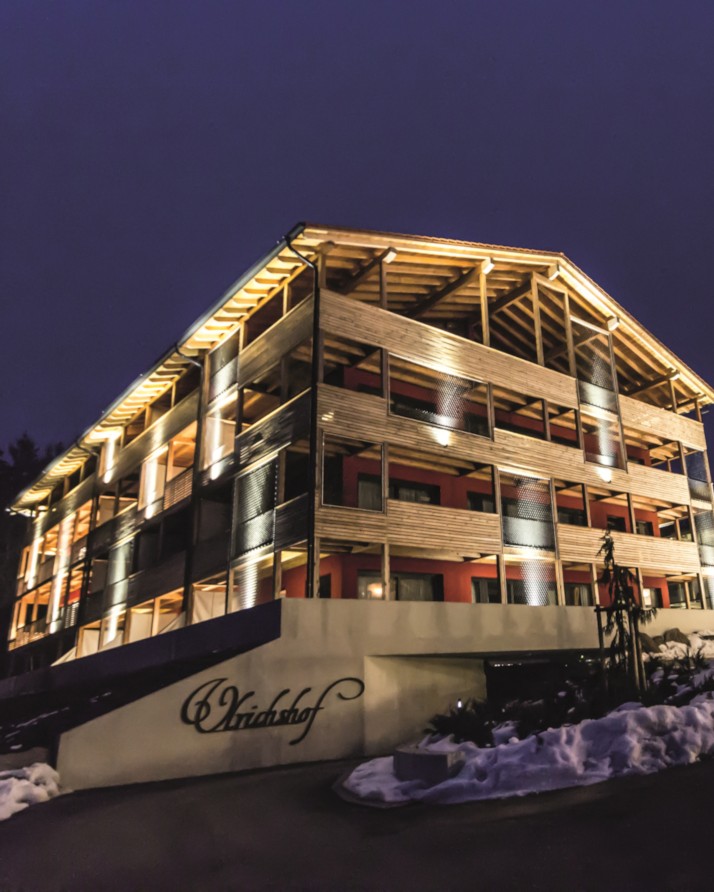
Setting the scene
Light intensity helps set mood and ambience. For a vibrant atmosphere, use a higher lumen output to create a striking effect. For a more relaxed atmosphere, use a lower brightness level.
For outdoor lighting we recommend between 50 and 185 lux on the surface. This will be determined by the fitting’s distance away from wall, the angle of the beam and its output.
Also, consider the colour of the wall. If it’s a dark surface, you might have to use a higher output fitting. And avoid illuminating reflective surfaces, such as windows that may cause glare.
Using colour temperature
Next think about the colour temperature of the light because it can really enhance the material that you are showcasing.
For warmer coloured materials such as wood or sandstone a warmer light of 2700K or even 2200K will help it glow. To help bring out the natural elements of stone and for red brick consider 2700k or 3000K. And for white materials a cooler light of 4000K or more will add drama.
But be careful where and when you use cooler light sources because light from the blue spectrum can have a negative impact on nocturnal animals and can cause light pollution. We generally recommend lighting of 3000K or below, and sometimes an ember light of 2200K is best.
Defining texture
Good lighting will also help bring different textures to life. For a textured surface installing a spotlight that is closer to a surface will graze light over it to help add depth. This trick works particularly well with a horizontal texture as the light will create more shadow and contrast to enhance the material’s surface.
In contrast, for a flat surface you can use a flood to wash light over it and really emphasis the clean nature of the area.
Lighting control
Finally, to save your customer energy and be a good neighbour, you should install lighting control so that the lighting is only one when needed. It could be as simple as PIR sensors, timers or even manual switching or more sophisticated lighting control that also allows your customer to set different lighting scenarios.
Good architectural lighting makes a statement. If you help your customer get it right, it will help their reputation and help you win more business.