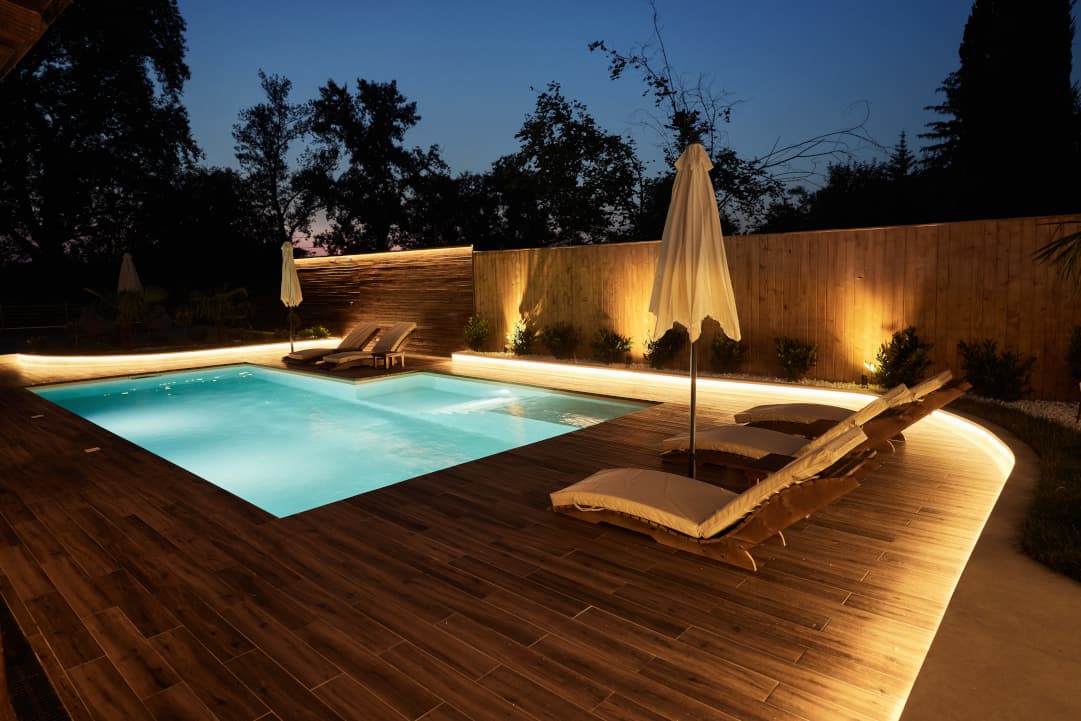
How to specify and install outdoor LED strip lighting
Outdoor LED strip lighting is proving extremely popular in a landscape lighting market that according to research is set to grow by more than 10% a year. Here’s what you need you know about designing, specifying, and installing this versatile product outdoors.
Why is LED Strip popular in landscape lighting?
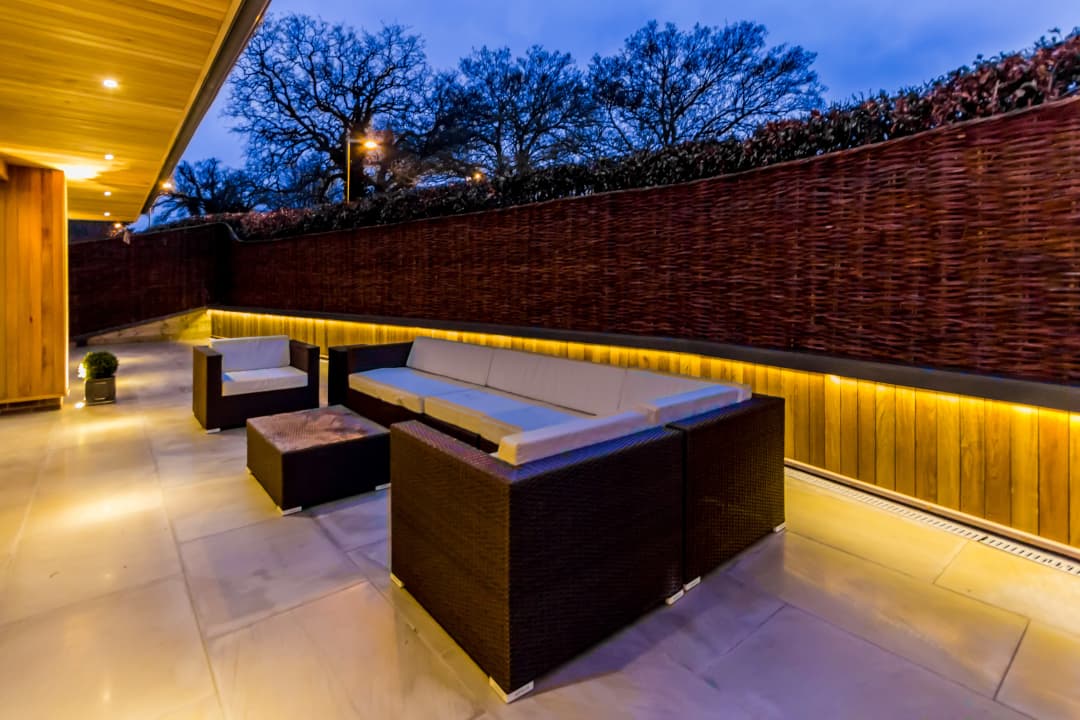
Residential and commercial businesses love using LED strip lighting outdoors because it offers something that no other luminaire can achieve. It provides a flexible outdoor solution that is great for ambient, accent and even functional lighting.
It meets a real trend towards “invisible lighting” where you can see the effect of the illumination but not its source. And because you can cut LED strip to size and it’s flexible you can install it almost anywhere to achieve this.
Popular applications include:
In fact, such is the versatility of this product as long as you choose the right product, you can install it almost anywhere. While it can be a source of primary light it normally offers low level concealed lighting that adds real depth to help people enjoy the outdoors as the evening draws in.
What LED strip to use
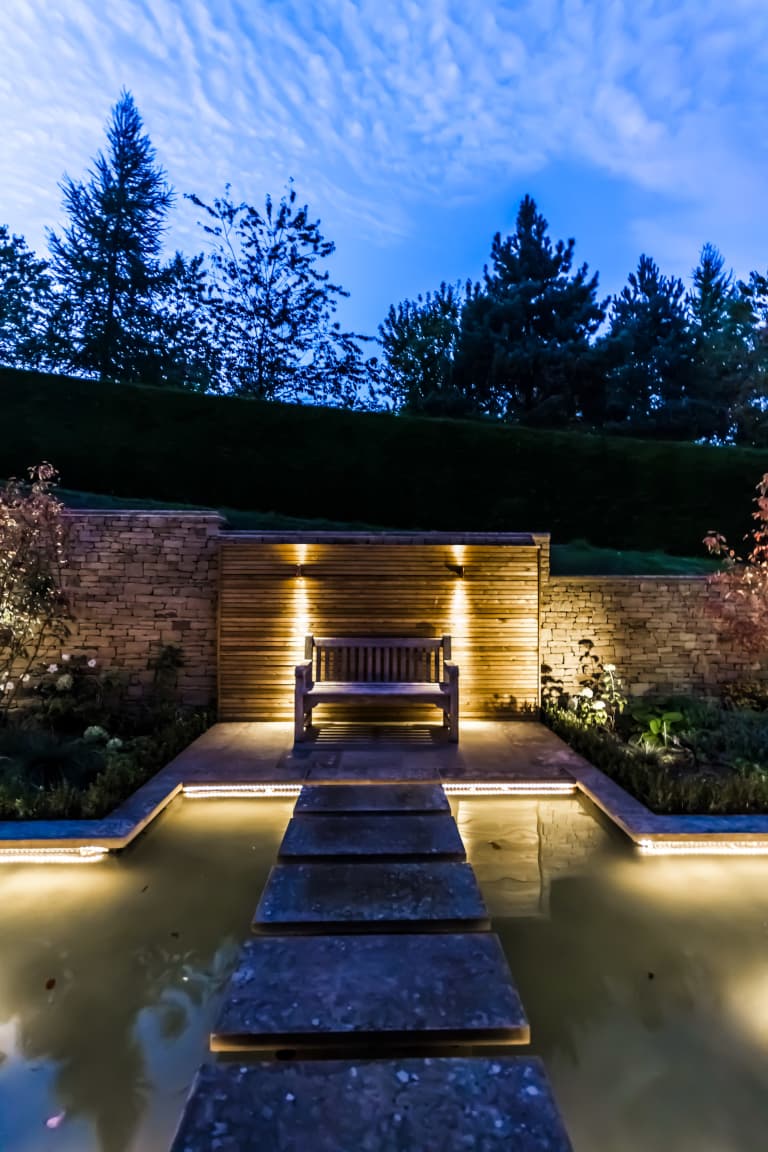
Just like indoor applications there is a wide range of LED strip to choose from depending on where you are using it for, what sort of lighting you need, how long it needs to be and how exposed it is to the elements.
Outdoor LED strip needs to carry on working in the face of an extremely harsh environment. Even in the UK temperatures can vary dramatically and it will need protection against rain and even submersion under water.
For outdoor applications, the IP rating of LED strip is vital. Normally you should specify:
Selecting the right voltage
Another consideration is what power and voltage to select.
For long runs there can be a problem with voltage drop which can affect the LED strip output and the number of drivers you will need. For most applications, a 24V LED strip is fine, but for long runs of up to 20 metres from a single power supply consider 48V and for very long runs of up to 50 metres you may even need a 230V strip.
The right light?
Customers generally want a soft diffused light when enjoying the outdoors which is why LED strip is such a popular choice. But what area you install it in could affect the amount of illumination your customer needs.
For entertainment areas such as for patios or decking an output of at least 1200 lumens is fine, but for accent lighting of a chosen feature you might specify 630 lumens per metre or less.
Colour temperature
Like other LED sources LED strip is available in different colour temperatures. Our ranges typically offer 2700K, 3000K and 4000K.
For most of your landscape lighting installations your customers will want a relaxing atmosphere where they can enjoy socialising with friends. Warmer lighting with a CCT of 2700K or 3000K is generally the best choice. It will also meet local council DarkSky requirements and have minimal impact on nocturnal animals.
You may need 4000K lighting where people need to concentrate, for example in food preparation areas, or if you want to make a cooler colour such as blue, green, or white more vibrant.
RGB colour change for drama
For ultimate flexibility RGB colour changing LED strips use red, green, and blue chips so the customer can choose from a wide spectrum of different colours for added decorative appeal.
RGBW LED strip pairs this with true white, typically a warmer white light of 3000K, so your customer can choose either white or a different colour to add some drama. RGBTW takes this one step further; it allows your customer to select from a range of whites from a very warm 2200K up to a cool 5500K or select a colour of their choice.
Practicalities of the installation
While we have covered the IP rating of the LED strip, you must also make sure that the whole system including cable joints, drivers, connectors, and end caps are also rated at least IP65 and preferably IP67.
It is also good practice to install most LED strip in aluminium profiles. It provides:
While Neon LED strips don’t strictly need them because you can’t see the direct light source, it is still better to consider a profile for the other reasons listed above.
Think also about future servicing of the system. While it is good practice to use IP67 drivers it’s still a good idea to locate them indoors where possible and to certainly make them accessible in case they need replacing after 5 years.
You also need to consider either SELV systems for outdoor usage and/or routing any cables underground, correct RCD protection, and proper earthing for metal profiles.
And finally consider the LED strip lighting as part of the whole landscape lighting scheme. Your customer will need to control it so that it is only one when they need it to save both energy and meet DarkSky requirements. Such control may be simple on/off switching, linked to timers and PIR sensors, dimming control and more sophisticated systems that can set different lighting scenarios including colour changing if you have installed RGB, RGBW or RGBTW strip.
As landscape lighting becomes increasingly popular for homeowners and commercial businesses such as hospitality venues, the flexibility and drama that LED strip can add to such installations is making it a must have. Understanding both the principles of landscape lighting and how to install different light sources like LED strip will win you more business in this rapidly expanding market.
Articles you may also like
These are articles we recommend that you also mind find interesting
Be the first to know the latest updates
Subscribe to our newsletter!
