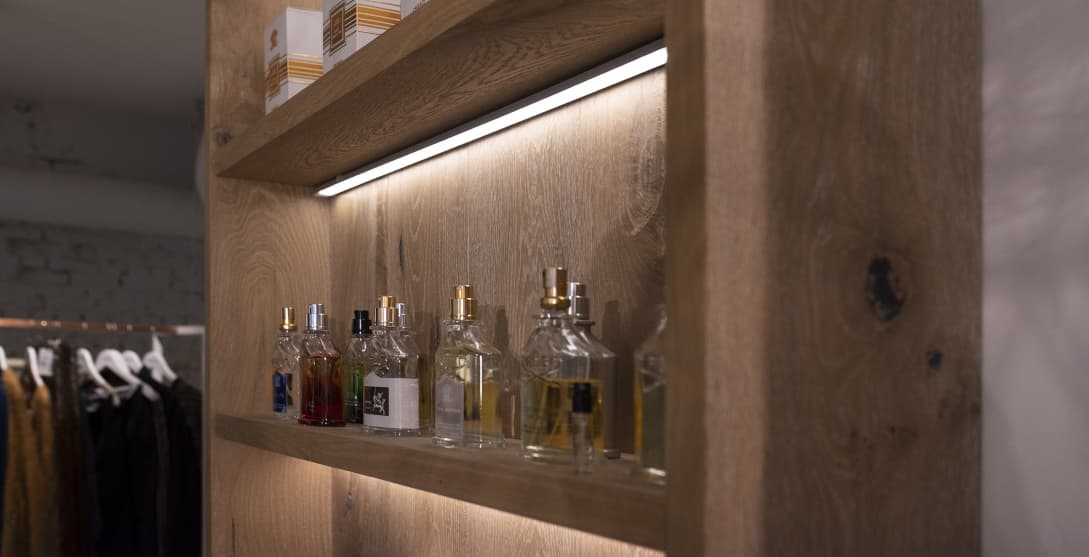
Adding depth with shelf and cabinet lighting
One of the simplest tricks to transform a lighting installation in a room is suggesting shelf and cabinet lighting. Done well it adds depth and a sophistication to a space that might otherwise appear flat.
While you may be asked to fit general lighting such as downlights, good lighting in a room is layered to include task and accent lighting. The latter adds interest, draws the eye, and highlights features. Shelving and cabinet lighting is one the simplest ways to achieve this and will win you plaudits from your customer.
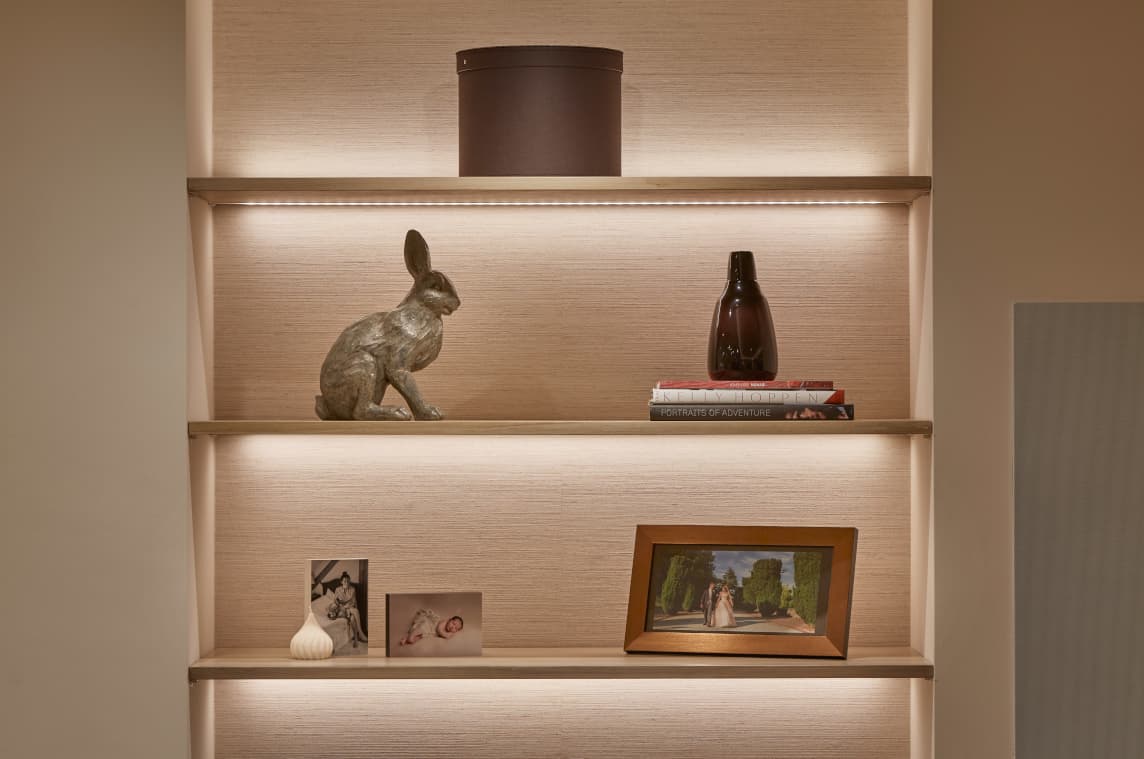
Why shelf and cabinet lighting is so effective
Most rooms will have shelving or cabinets and customers often spend a lot of money on this joinery to make a design statement. Yet it can soon fade into the background as the evening draws in.
It’s an easy win for you as an installer to suggest bringing it back to the fore through simple to install lighting such as LED strips. Shelving and cabinets help create depth in a room and the lighting can emphasis this and the material as part of a layered lighting scheme.
In some areas it can even provide subtle task lighting, for example by installing LED strip under kitchen cabinets in food preparation areas. If you include dimming, then it can either provide more lighting for a task, or your customer can dim it down so that it creates a soft glow to add depth.
It will also provide low level ambient lighting in a room and highlight the textures and colour of the joinery materials.
Installation tips
LED strip lighting is the most versatile product to use for most of these applications.
Mounting the LED strip on the front of the shelving so that it angles inwards will highlight objects underneath, reduce shadows, and provide task lighting if your customer needs it. As an alternative placing it at the back will create a soft glow for a more decorative feel that highlights textures or back panels.
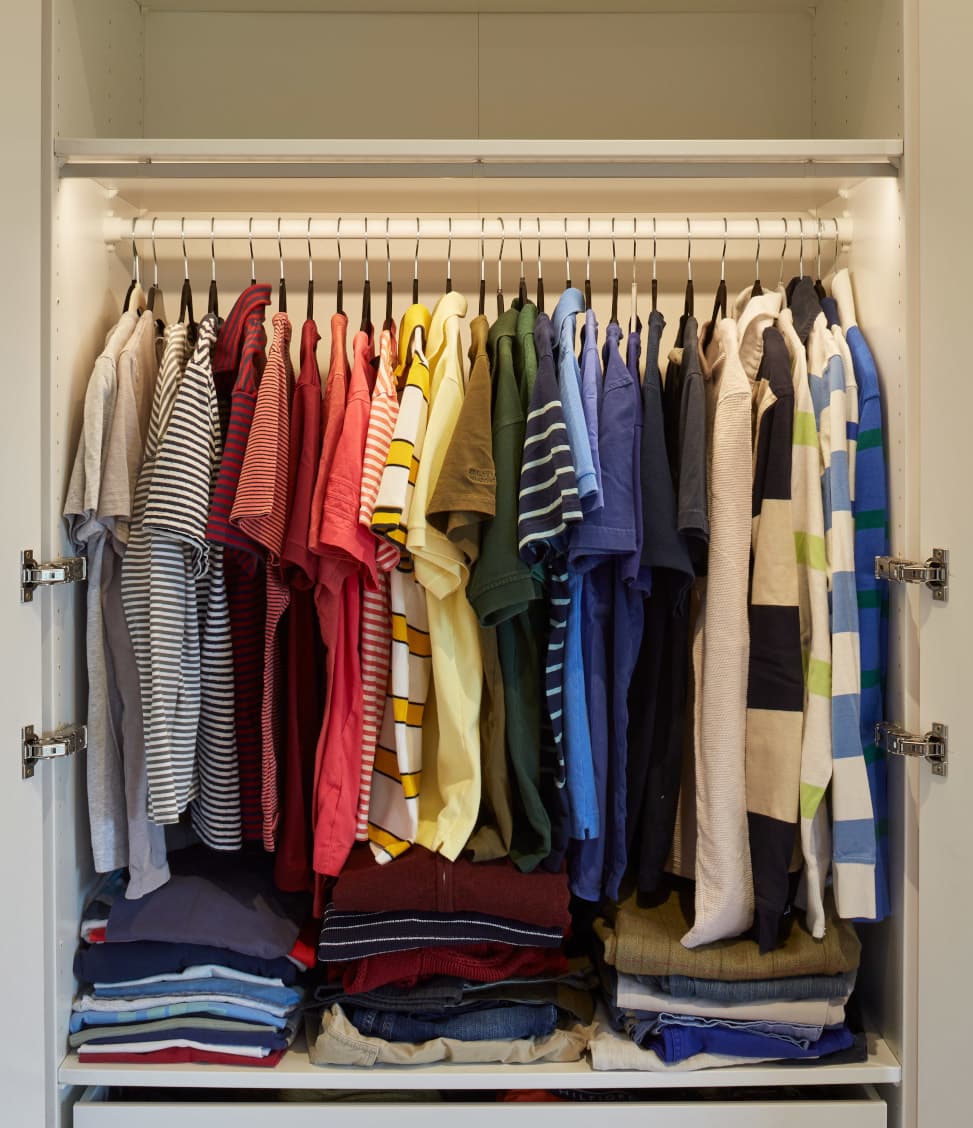
You can also suggest using it as vertical lighting in a wardrobe to provide even lighting across shelving. This creates a luxurious feel and will help your customer select clothing in the morning.
Wherever you install it we recommend that you use aluminium profile with LED strip lighting because it has a structural fitting so it will last longer, it eliminates glare by diffusing the light and it helps dissipate heat. When you can, work with the joiner on high end jobs so that you can conceal cable routes, drivers and install profile recesses so that while your customer can see the effect of the light, they can’t see its source.
Illumination, colour temperature, and CRI
What LED tape you specify will depend on what you are trying to achieve. Most people think of under shelf and cabinet lighting as accent lighting for which you will typically need LED strip that provide between 500 lumens per metre up to 650 lumens per metre.
But if you install dimming control then your customer can control the illuminance level so a higher output of 1500 lumens or more might be better. In a kitchen for example they may wish to use it for both task lighting and as accent lighting, in which case
Colour temperature
Like other LED light sources LED strip allows to select different correlated colour temperatures (CCT) you use. For accent lighting the right choice will emphasise the material that you are lighting.
To help bring out the warm tones of wood for example you should select a warmer white of 2700K to help make it glow; but if you have white shelving or another cooler shade then using a cooler temperature of 4000K or higher will make it more vibrant.
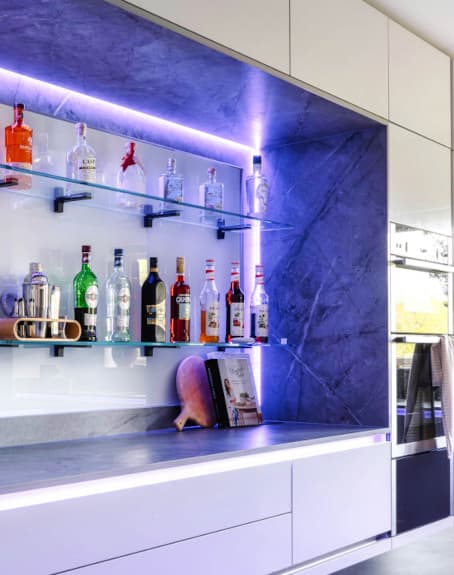
And if you select RGB LED strip then your customer can change the colour of the LED strip to add a bit of extra flair. Going one step further installing RGBTW LED strip such as our MC20 range allows the customer to change colour and/or change the colour temperature of the white light they want to use.
Colour Rendering Index
If your customer is using LED strip to display artwork or ornaments on shelves or in cabinets, then check the CRI of the LED source that you are using. This measures how well a light source reveals the true colour of an object. For most applications, a CRI of greater than 80 is fine, but when a customer wants to showcase the true colour of an object then you should specify lighting with a CRI > 90.
Control
Shelf or cabinet lighting is part of a layered lighting scheme, so giving your customer additional control so that they can set different scenes ensures that they make the most of it.
It could be as simple as additional on/off or dimming control, linked to motion sensors such as for wardrobe lighting or food cabinets in the kitchen, or part of a smart system so that your customer can set different lighting scenes according to how they want to use the space.
Adding value to a lighting scheme involves thinking beyond general lighting. Accent lighting is a key part of a layered scheme and one the simplest ways for you to achieve this is by suggesting shelf and/or cabinet lighting. It demonstrates your expertise and reputation and will win you more business.
Articles you may also like
These are articles we recommend that you also mind find interesting
Be the first to know the latest updates
Subscribe to our newsletter!
