Make sure that you get the specification of an outdoor downlight right so that your customer has the right atmospheric lighting for years to come.
There are many factors to consider if you want to avoid an unhappy customer calling you back to fix a problem.
IP65 rating
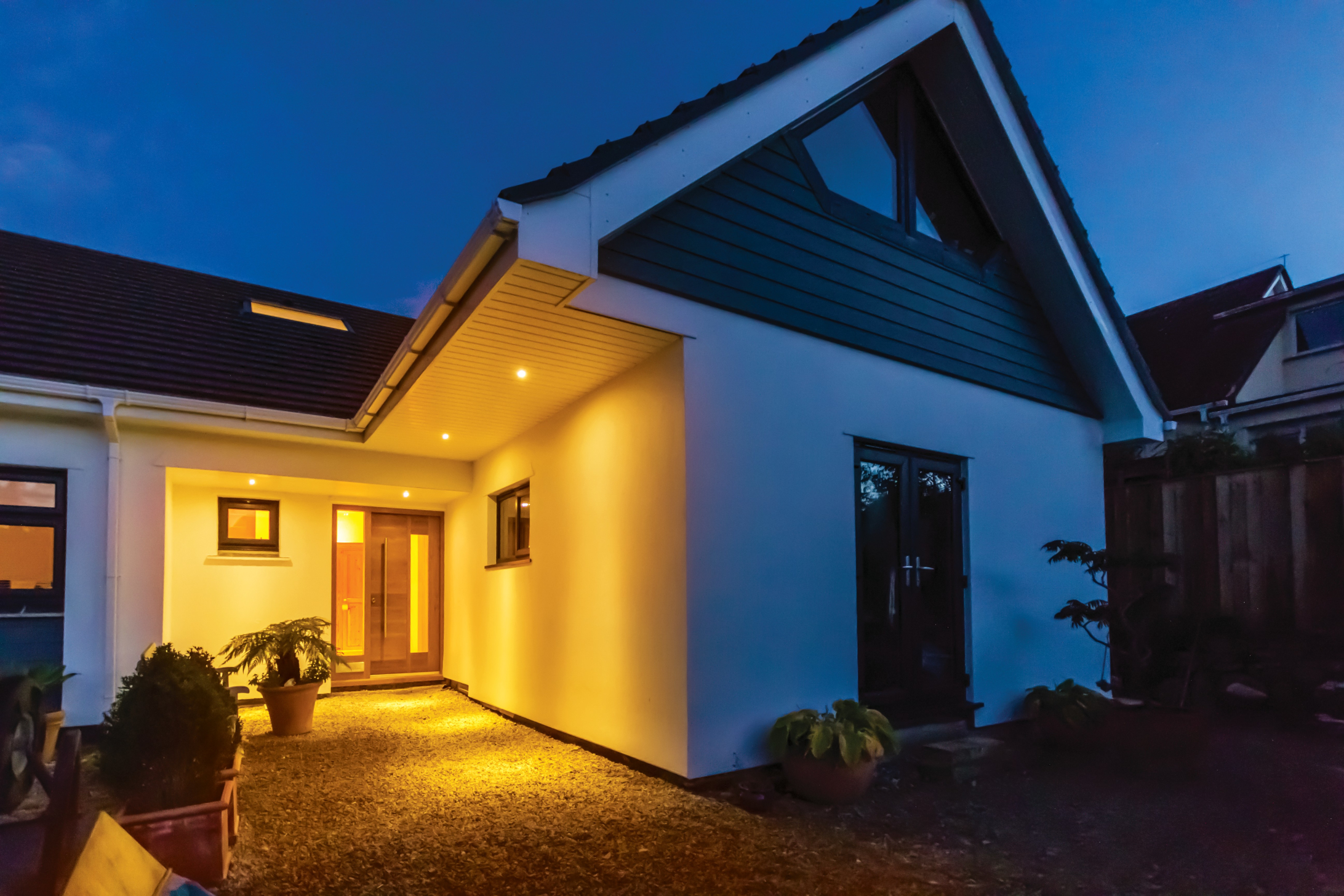
While it is true that you will install most outdoor downlights under soffits or eaves, they are still open to all that the British weather can throw at them.
Many electricians believe that IP44 is good enough, but we recommend specifying a fitting that has an IP65 rating from both above and below.
Strong winds can create eddying winds to drive rain and dust in from below and owners or tenants will clean the area, even using a jet wash as they would for other outdoor areas.
But what many fail to realise is that you also need to protect the fitting from water ingress from above as well. This may be because the eaves and soffits have a leak that goes undetected, or it could be due to condensation that collects at the back of the product. Either way inadequate protection from above the fitting means that moisture and/or dust can get into the terminal block, driver or housing leading to short circuits or tripped RCDs in the consumer unit.
Most downlights are not designed for soffits and may only provide IP65 protection from the front. To avoid having a disappointed customer and having to replace the product, make sure that you double check the specification of the fitting that you are installing.
Corrosion resistance
All outdoor lighting is subject to a more aggressive environment than it would face indoors so check that the fitting is corrosion resistant, especially if the project is within 10 miles of the coast where it will be open to salt spray.
Colour temperature
Just like an indoor downlight think about the colour temperature that you want the luminaire to produce.
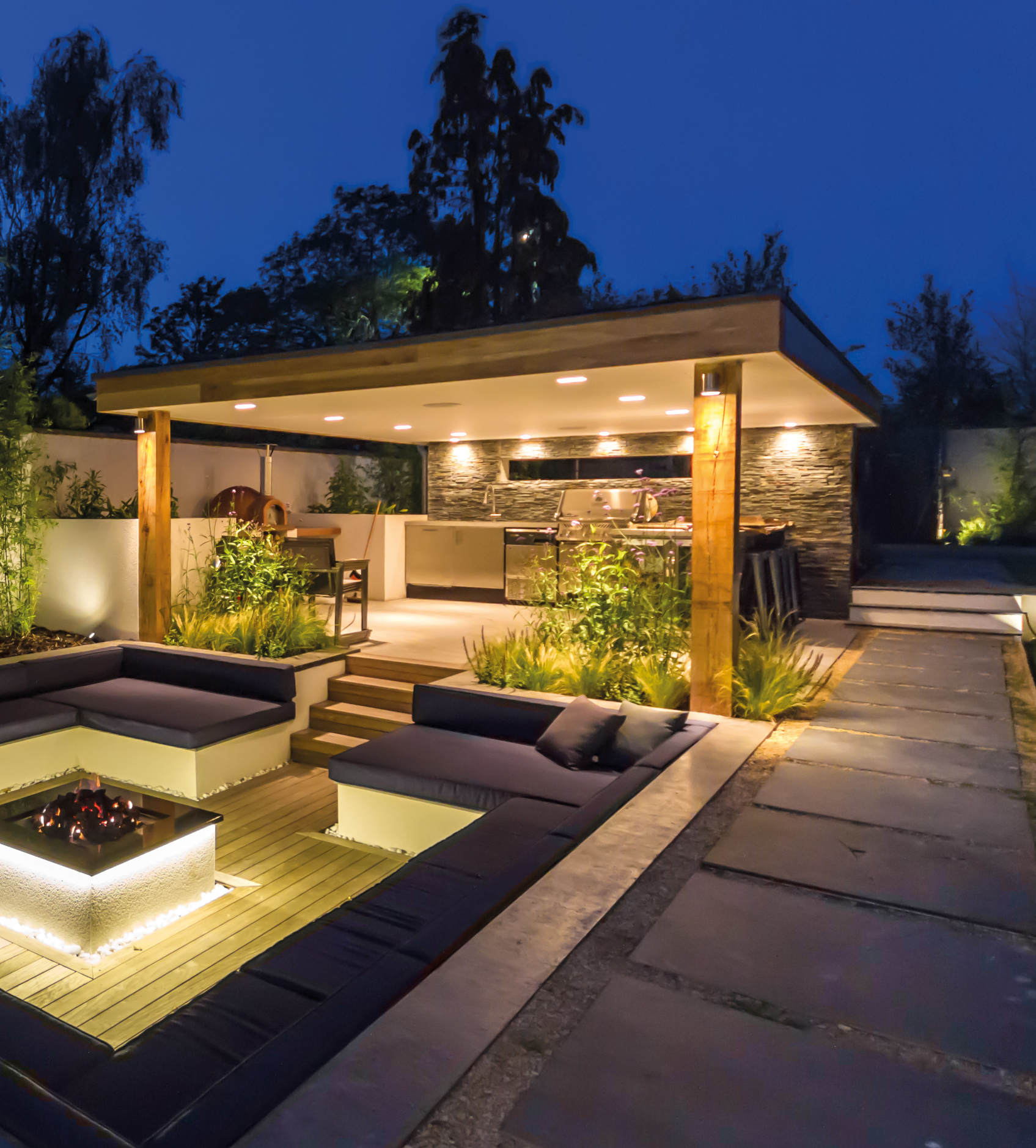
For most outdoor applications we recommend a warm light of 2700K or even 2200K as it has less effect on wildlife and will not scatter so much in the atmosphere to meet a local council’s “DarkSky” requirements.
But it’s also worth considering what the downlight is lighting, when selecting the best colour temperature for your customer. If it is lighting a warmer colour surface such as wooden decking, then a lower CCT of 2700K or even 2200K will help make it glow. If, however, the surface under the downlight is white, then you should consider a cooler temperature of 3000k to help make it pop.
Lighting Control
To save energy you should also connect outdoor downlights to solar sensors so that they are only on at night. And to create the right atmosphere, you may also suggest manual dimming and on/off switching.
You will generally install outdoor downlights in areas that connect indoors with outside. It could be a transition area or a place where people entertain and socialise; either way the impression that it leaves is important. It means that you need to get the specification right and install a product that is fit for purpose and will stand the test of time.